
Social-Emotional Learning from the Top Down: Administrative Practices that Support Children's Emotional Development, Kay Montgomery Albrecht
2 PM - 3:30 PM EST
Register for link

About this webinar
Sponsored by Child Care Information Exchange.
Early childhood educators typically recognize the importance of emotional and social development on children's educational and life futures. Recent neuroscience research reveals how critical administrative support of teachers is in the quest to help children become resilient, well-adjusted, and socially and emotionally competent. Administrators must help teachers build core capabilities to support children's emotional and social development. However, the devil is in the detail! Just what should administrators do to pave the way for teachers to work with families and children to build capacity in social-emotional development?
This powerful webinar by early education expert, Kay Albrecht, will focus on four leadership strategies designed to help build teacher competencies in this area. These strategies frame the key role of relationship building as both an active practice for administrators and teachers. The focus will be on the kind and quality of relationships with children, with families, and with each other, that provide myriad opportunities to gain competence and skills continuously.
The webinar will include specific teaching strategies and the concomitant administrative strategies that educators can use every day in their roles with their peers, the children, and the families in their care. Improving the adults’ core capabilities, such as planning, focusing, exhibiting self-control, becoming self-aware, and being flexible will lead the way to offer children optimal opportunities to make developmental progress in becoming and being a friend to others.
Participants in this session will:
Examine the close connections between responsive adult/child relationships and children's educational and life outcomes.
Identify four administrative strategies ECE administrators can use right away to help teachers support emotional and social development in young children.
List teaching competencies that support children's emotional and social development and use them to identify shared relationship-building goals.
Plan professional development experiences for ECE teachers that increase core capabilities to resource children's emotional and social development.
All sessions are 1.5 hours long, and include a brief announcement from our sponsor.
2:oo PM – 3:30 PM Eastern Time.
To ensure you receive confirmation and reminder emails, add [email protected] to your contacts list. If you do not receive your email confirmation, check your Spam or Junk mail folders in your email system.
Can’t participate in our webinars at the appointed time? Never fear! All of the webinars are recorded. To view the recording, simply register now and you will receive an email with a link to the recording when it is ready to be viewed. You can still download the certificate by watching the recording to the end when the certificate link is announced and displayed on the screen.
Only 1,000 people at one time can attend our webinars, but registration often tops 4,000. Only the first 1,000 people to click the link to attend the webinar will be able to get in. We start the webinars 30 minutes in advance of the start time. Arrive early to make sure you get in.
Please be advised that you will only be eligible for the great door prizes if you participate in the live session.
You can earn .2 CEUs for each webinar. The cost is $15 paid to University of Oklahoma online when you apply. Learn more here: Continuing Education Units (CEUs) from University of Oklahoma
Upcoming Webinars
Preschoolers and Pixels by Amy Reyes-Hauff, CDHP
Oct 21, 2026

Our Voices Across Generations: AANHPI Educators in Early Childhood Education Panel
Oct 28, 2026

The Enrollment Hot Seat: A Live Marketing Workshop with Three Real Child Care Programs by Bruce Spurr
Nov 3, 2026

Boundaries vs. Requests: Setting Limits Without Escalation by Alyssa Blask Campbell
Nov 4, 2026

HuUbuntu: I Am Because We Are - Way of Life by Dr. Patrick Makokoro
Nov 5, 2026

Enrollment Playbook: Policies, Handbooks and Growth
Nov 10, 2026

Inspiring Terrific Toddlers 1: Why Do They Do That? Promoting Toddler Development to Reduce Frustrating Behaviors by Raelene Ostberg
Nov 11, 2026

Compliance Without the Chaos: How to Keep Your Program Inspection Ready
Nov 17, 2026

When to Say When: Building Confidence in Supporting Neurodivergent and Developing Minds Part II: Direct Guidance, by Michele Hemenway Pullen
Nov 18, 2026
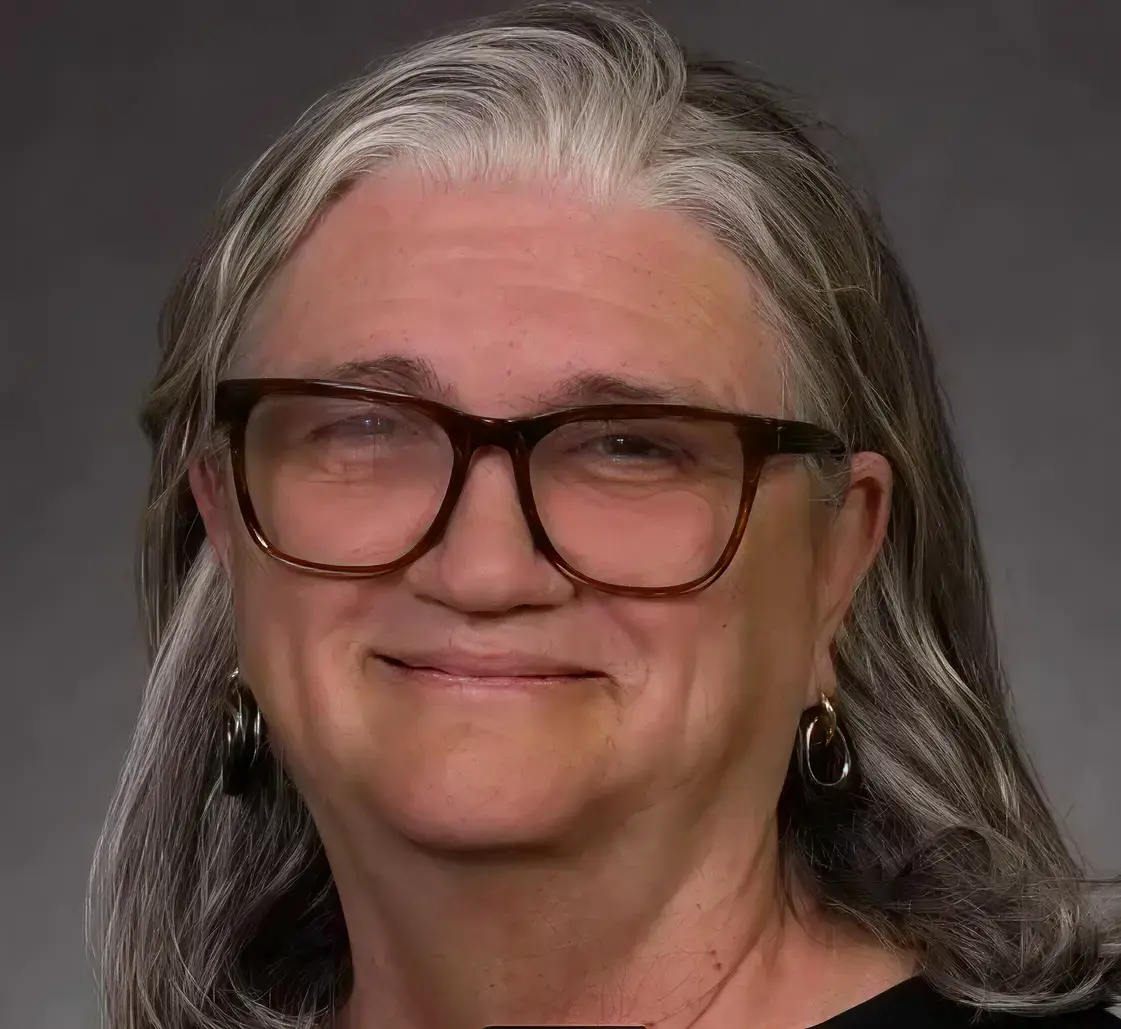
This is Your Brain on Fairytales: Storytelling, Neuroscience, and Connecting the Dots in Early Childhood by Stephanie Goloway
Nov 19, 2026

Hyperlocal Marketing: Turn Community Connections into Child Care Enrollment by Kate Woodward Young, M.Ed. and Carrie Casey
Dec 1, 2026

Talk, Play, Read, Sing: The Language Nutrition Approach to Creating Powerful Language Environments for Young Children by Jennifer Adams Oppenheimer
Dec 3, 2026

Ready for 2027? Need an Assistant? Let AI Help You Work Smarter by Monique Reynolds
Dec 8, 2026

Inspiring Terrific Toddlers 2: Evidence-Based Strategies to Set Effective Limits and Gain Gleeful Cooperation by Raelene Ostberg
Dec 9, 2026
Through the Child’s Eyes: Creating Responsive Classrooms Through Observation, Interaction, and Belonging by Lori Kowit, M.A.
Dec 10, 2026
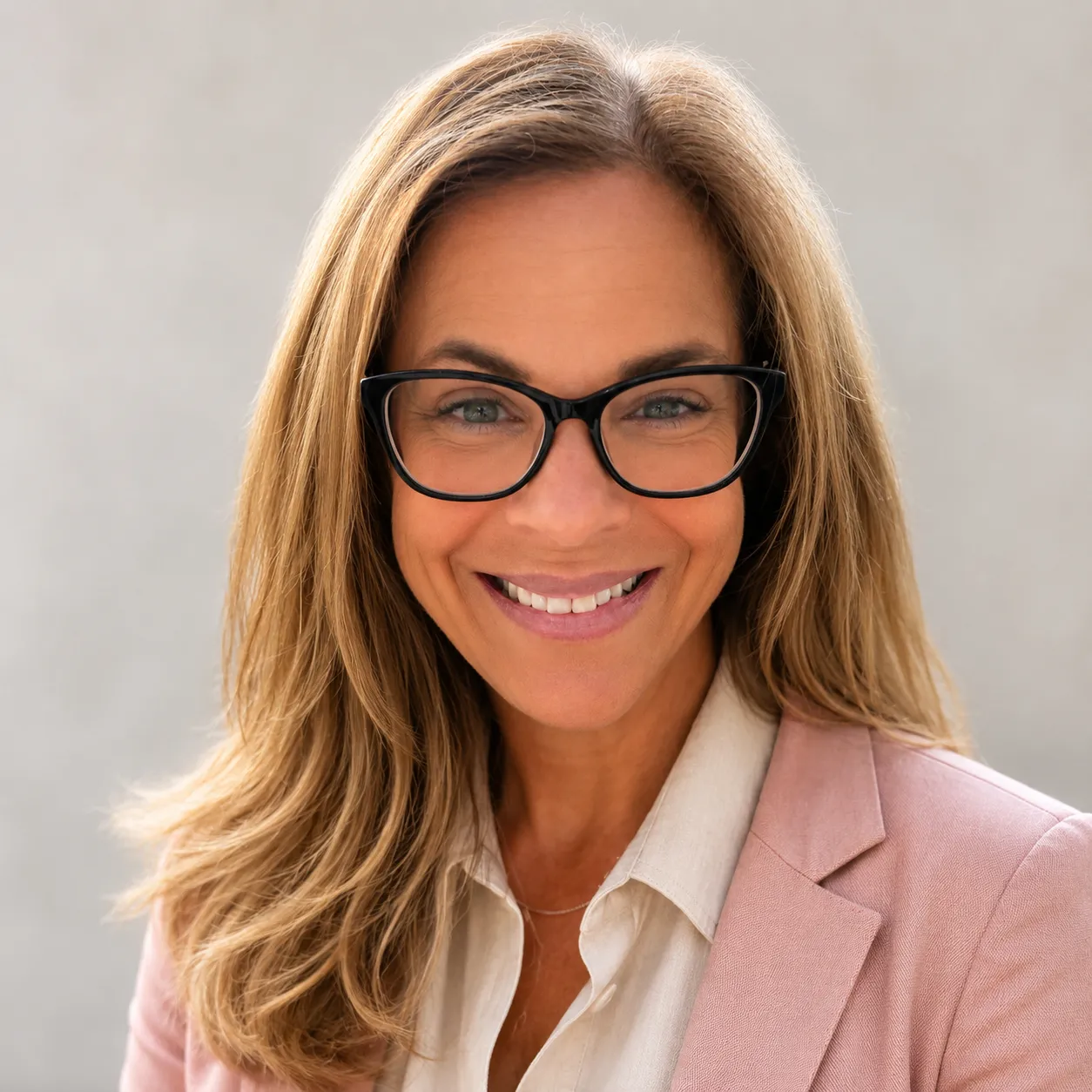
Pause, Ponder, Play: The Power of Time in Nature-Based Learning by Dr. Rachel Larimore
Dec 16, 2026

Improving Young Children's Self-Regulation and Healthy Eating Habits: Four Core Guidance Strategies by Sarah Braaten, Ph.D.
Dec 17, 2026

Learning Beyond the Fence: Safe and Meaningful Nature-Based Learning Outside the Fenced Play Area by Dr. Rachel Larimore
Jan 20, 2027
What's on Your Plate? Supporting Self-Regulation and Healthy Eating Through Family-Style Mealtimes by Sarah Braaten, Ph.D.
Feb 10, 2027
Frequently Asked Questions
How do I earn an official certificate?
Are there any prerequisites for attending a webinar?
Do you provide CEUs?
What is the format and learning environment of your live webinars?
How much does it cost to register for or attend a webinar?
How can I access an on-demand recording?
Can I earn a certificate by watching a recording?
How do I earn a certificate of attendance?
If I'm attending with a group, can we all earn a certificate of attendnace?
Free Certificates of Attendance
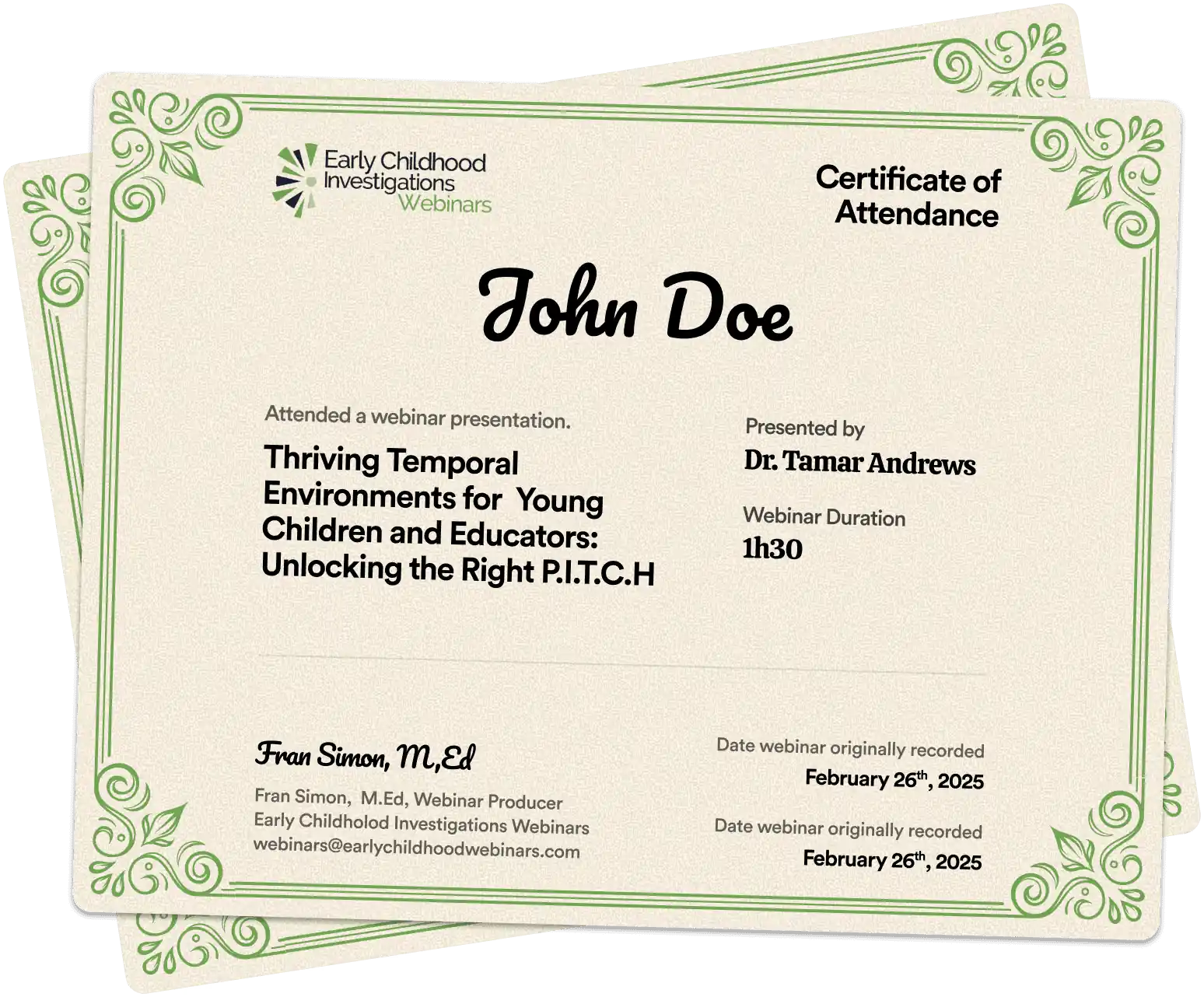
Attend the live webinar and stay from the beginning to the very end to automatically receive an official, personalized certificate by email within one week of the live webinar.
If you arrive late to the live webinar or watch the recording, you can download the blank certificate by entering the link announced and displayed at the end of the webinar into your browser.